

AI Tools in Informed Consent: What Sponsors Need to Know About Risk

Many sponsors are reaching for AI tools throughout the informed consent process, from formatting documents to drafting participant-facing language. Most don’t yet have a clear way to sort what they’re working with. An automated tool that checks reading grade level sits in a different category than a large language model drafting consent language or answering a participant’s question in real time. Both get labeled “AI.” Only one of them should keep a sponsor up at night.
The more useful question in assessing risk isn’t whether a tool used AI. It’s what the tool actually did, and what could go wrong if it did that poorly. The tools sponsors are most likely to encounter fall into five categories, each carrying a different kind of risk.
1. Automated Readability and Formatting Tools
Risk: Low
The work here is mechanical: measuring reading grade level and modifying formatting to improve readability (e.g., adding bullet points). The output is also predictable and repeatable, as the same input produces close to the same result every time. Sponsors should document that the tool was used and confirm a human reviewed the final document before it goes out. That documentation doesn’t need to be elaborate; a note in the file showing which tool ran and who signed off is enough.
2. AI-Assisted Plain Language Editors
Risk: Low to Moderate
Here, judgment enters the process by rewriting jargon and simplifying language to meet a target reading level. The output is more constrained than a general-purpose writing tool, but it isn’t infallible. Human review should confirm the accuracy of anything a participant will lean on to make a decision, particularly study requirements and risk language. A challenge in clinical research is that terms may be used differently than they are in common lay language, and that words that are synonyms in other contexts may not be in a research context. A simplified sentence that reads more smoothly but changes the meaning of the content has failed at the one job the tool was brought in to do.
3. Simple Image and Content Generators
Risk: High
A prompt is all it takes to produce new content, such as a supporting visual or a short, tailored message for consent materials. Because the content is generated rather than edited, a human should review against the protocol itself, not just a style guide. A generated image can look clinically convincing at a glance and still get a critical detail wrong, such as a syringe used in a way the protocol doesn’t call for or procedure steps shown out of sequence. Dangerous errors like these are easy to miss precisely because the image looks professional.
4. AI Writing Assistants and Large Language Models Drafting Consent Language
Risk: High
Now the risk profile changes. Drawing on multiple sources at once, the output can be tailored, on the surface, to a specific cultural or demographic profile. It can also be fluent and wrong at the same time; a proofreader tends to read polished writing less carefully, not more, so factual errors slip past.
For example, the National Eating Disorders Association had to pull its own chatbot after it began recommending calorie restriction and weight loss to users who told it they had an eating disorder. Researchers traced the problem to the training data itself: text pulled from across the internet reflects the internet’s own bias toward diet culture, and the model reproduced that bias for exactly the population it was built to protect. A consent draft pulled from a similarly wide, uncurated pool of sources carries the same risk; if the underlying material is unreliable, the sentence built from it can still read as authoritative.
The same problem can originate closer to home. If the protocol an LLM is drafting from was itself partly AI-generated, any inaccuracy in that source material carries straight through to the consent form, with no obvious point in the process where it gets caught. That risk concentrates in the risk and benefit sections. A draft can blur research-related risk with standard-of-care risk, understate anything that isn’t physical risk, or edge toward therapeutic misconception (conflating participation in research with individualized clinical care). It also can’t do what an experienced clinician does instinctively: separate a risk that’s real for this specific agent from one that’s still theoretical, based on prior experience with the drug or related compounds.
Federal regulation requires a complete and accurate description of risk under 45 CFR 46, exactly where an LLM’s fluency can outrun its accuracy. The gaps aren’t limited to risk language either. For example, a draft can miss institutional policy or other applicable regulatory requirements that a specific protocol triggers, with HIPAA considerations or added protections for vulnerable populations among them. Thorough, documented human review is not optional here. Polished output is not the same as accurate output.
5. Tools Claiming Deep Cultural or Community Tailoring
Risk: High
At the far end of the spectrum, the promise is to tailor consent materials to specific community identities, histories of trauma, accessibility needs, or evolving cultural contexts. Materials built at this level tend to test poorly with the communities they’re meant to reach, because the nuance that makes tailoring effective isn’t something a model can infer from a prompt. Sponsors shouldn’t rely on AI for this work without extensive human review and direct testing with the community for whom the material is written.
Know the Tool Before It Reaches the Participant
Used well, AI tools can help create consent materials more efficiently. However, sponsors need to know what the tool is doing and evaluate the risk before the document reaches a participant.
A draft checked against the protocol is a start. A clinician confirming the accuracy of medical language is another. So is a check for bias, whether the language holds up in the regulatory environment it needs to operate in and genuinely fits the population reading it, not just the reading level a tool was told to target. The risk and benefit sections deserve a second, dedicated look every time, since that’s where AI-generated errors are hardest to catch and most consequential.
Sponsors should also be ready to disclose AI involvement whenever a participant is relying on AI-generated content to make their decision to enroll. A sponsor doesn’t need a specific regulation requiring that disclosure to see why it matters.
The tools will keep changing faster than the guidance does. Sponsors who build the habit of assessing AI risk before it reaches a consent form will be ready for whatever comes next, regardless of where the regulations land.
About the Authors:
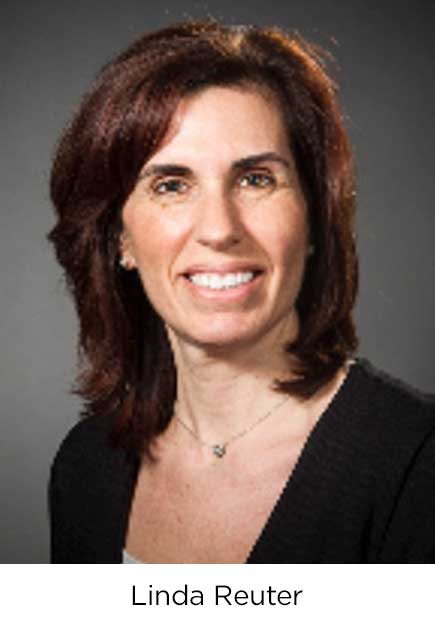 Linda Reuter is the Sr. IRB Director at BRANY. Her responsibilities include supervising the IRB staff and maintaining compliance with the IRB Standard Operating Procedures as well as applicable regulations. This includes supervising pre- and post-IRB meeting activities, expedited reviews, continuing reviews, protocol monitoring, continuing education, development of short and long-term strategic goals for the organization, maintaining AAHRPP accreditation standards, policy maintenance and development, and training and mentoring of IRB staff. Ms. Reuter graduated with honors from SUNY Stony Brook with an M.S. in Health Sciences. She holds a B.S. in Biology from SUNY Stony Brook and an advanced certificate in Health Care Management.
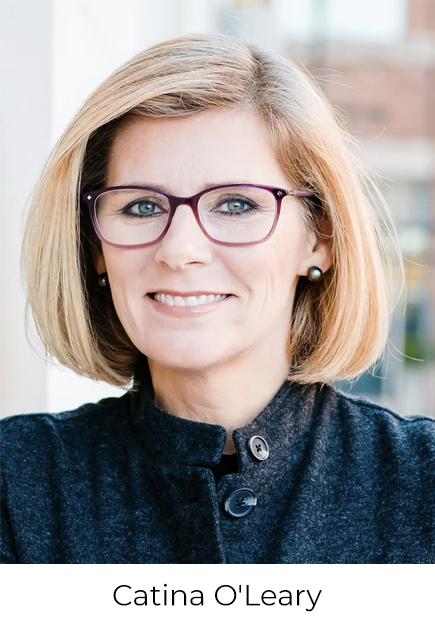 Catina O’Leary, PhD, LMSW, is President & CEO of Health Literacy Media. Dr. O’Leary has led the organization’s growth into a globally recognized leader in health literacy and science communication. A licensed master social worker, she brings extensive experience in community-based research, multi-site clinical trials, and IRB protocol development, including over a decade of service on the Human Research Protection Office’s continuing review committee at Washington University School of Medicine. Dr. O’Leary is a Founding Member and Treasurer of the United States Health Literacy Association and Secretariat of the International Health Literacy Association.

